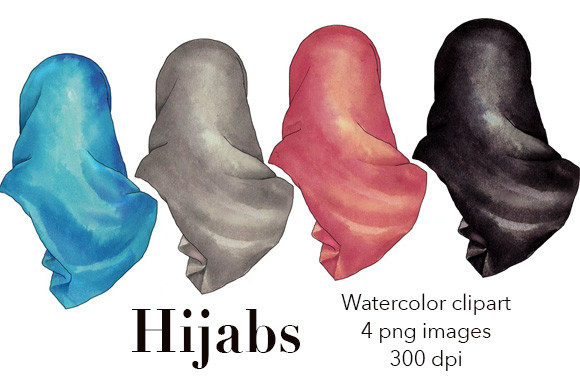
Hijab Watercolor PNG Clipart: A Designer's Review
As a designer who spends more time staring at stitch maps than most people care to admit, I approach every new digital embroidery file with a mix of excitement and skepticism. When I first pulled up the Hijab Watercolor PNG Clipart, my initial reaction wasn't about the pixels on the screen, but rather how those soft, flowing lines would translate into thread. There is a distinct difference between a graphic that looks good on a laptop and one that holds its integrity under the needle of a machine. This review breaks down my practical assessment of this design for real-world embroidery projects, focusing on where it shines and where you need to proceed with caution.
The Aesthetic Mood and Visual Personality
The first thing that strikes me about this Illustrations piece is its gentle, artistic vibe. The watercolor style suggests fluidity and softness, which is a refreshing change from the rigid, blocky vectors we often see in standard machine embroidery design libraries. The layout feels organic, avoiding harsh geometric borders in favor of a more natural silhouette. For a designer, this presents both an opportunity and a challenge. The mood is perfect for boutique branding, nursery decor, or any project aiming for a handmade, artisanal feel rather than a corporate look.
However, translating "watercolor" into thread requires careful thought. In a physical finished product, we rely on thread colors and stitch types to mimic that blended effect. If this design is digitized correctly, it should utilize a mix of fill stitch for the body and perhaps lighter running stitch or satin accents to create depth. My concern with watercolor-style graphics is always the loss of detail; if the gradients are too subtle, they can disappear entirely once stitched onto textured fabric.
Real-World Application: The Custom Tote Bag Scenario
To truly test the viability of the Hijab Watercolor PNG Clipart, I imagined a specific client request: a custom order for a local women's boutique needing branded tote bags. These aren't just promotional items; they are meant to be statement pieces carried daily. In this scenario, the design needs to be large enough to make an impact but detailed enough to show quality.
On a canvas tote bag design, the slightly rough fabric texture can actually work in favor of a watercolor aesthetic, hiding minor imperfections while adding to the rustic charm. I envision using a medium-weight stabilizer to prevent the fabric from puckering, ensuring the soft curves of the hijab illustration remain smooth. For a small shop product like this, the visual appeal directly correlates to perceived value. A customer is more likely to trust a brand that pays attention to the elegance of their logo presentation. If executed well, this design elevates a simple bag into a piece of wearable art.
Versatility Across Different Products
Beyond tote bags, this design has strong potential for various custom apparel items. I can easily see it working as a chest pocket detail on a denim jacket or centered on a cozy sweatshirt embroidery project. The softer lines complement the casual nature of fleece and cotton blends. It would also be a lovely addition to baby embroidery projects, such as bibs or onesies, where harsh lines feel out of place. For holiday embroidery gifts, pairing this motif with floral elements could create a unique, personalized gift that stands out from generic store-bought items.
For Etsy sellers and creative entrepreneurs, the versatility extends to digital assets as well. Before even stitching, this image serves as an excellent base for printable mockup creation, allowing you to showcase your handmade product listings with professional consistency. Whether used for an embroidered patch or a direct-to-garment print, the core strength of the design lies in its adaptable, friendly personality.
Critical Considerations for Stitching Success
While the design is beautiful, practical experience dictates that we must address where it might struggle. Watercolor effects often rely on low-contrast shading, which can vanish on dark fabrics. If you are planning to stitch this on a black hoodie or navy cap, you must verify that the embroidery file includes enough light-colored threads or outlining to make the shape pop against the background. Without sufficient contrast, the design will look muddy and undefined.
Furthermore, consider the hoop size limitations. If the design contains intricate, tiny details intended to mimic brush strokes, shrinking it to fit a small hoop for a baby sock or a curved surface like a baseball cap could result in lost definition. Dense stitch areas in a small footprint can lead to needle breakage or fabric distortion. For commercial embroidery runs where speed and consistency are key, you want to ensure the stitch density isn't so high that it slows down production or creates a stiff, cardboard-like feel on the garment.
Designer Notes and Pre-Production Checks
Before committing to a full production run or selling this as a design asset, I strongly advise following these practical steps:
- Test on Scrap Fabric: Always stitch a sample on the exact material you intend to use. The way thread interacts with linen differs vastly from how it sits on polyester.
- Check Thread Contrast: View your design in black and white on your screen. If the shapes merge into a gray blob, you need to adjust your color palette for better separation.
- Review Stitch Density: Ensure the fill isn't too heavy, especially if the final item needs to be soft and drapey, like a scarf or lightweight tee.
- Inspect Small Details: Zoom in on the digitized file. Are there tiny running stitches that might pull out after the first wash? Simplify if necessary.
- Confirm Licensing: If you are an Etsy seller or running a craft business, double-check the license terms. Can you sell the finished physical item? Can you resell the digital file? Never assume.
- Stabilizer Selection: Match your stabilizer to the fabric weight. A watercolor design needs a stable foundation to keep those soft edges crisp.
In conclusion, the Hijab Watercolor PNG Clipart offers a delightful blend of modern aesthetics and traditional modesty themes. It is not just a graphic; it is a potential centerpiece for meaningful personalized gifts and boutique merchandise. However, its success relies entirely on the skill of the operator and the quality of the digitization. By respecting the limitations of thread and fabric, and by testing thoroughly, you can turn this digital illustration into a stunning tangible reality that resonates with customers and enhances your brand's reputation for quality.