Cute Lions Watercolor Clipart: Illustrations for Branding
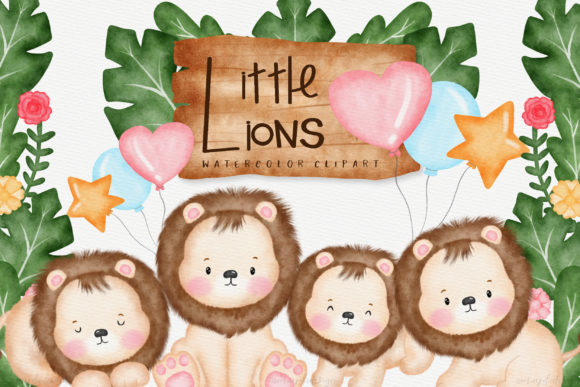
As a brand designer who has spent years refining visual identities for local businesses, I approach every new graphic design asset with a critical eye. It is not enough for an image to be pretty; it must serve a strategic purpose within a broader brand identity. Recently, I evaluated the Cute Lions Watercolor Animal Clipart collection with a specific project in mind: a rebrand for "Little Roar," a local, handmade children's skincare line. My goal was to determine if these Illustrations could elevate their packaging design and social media presence from generic to memorable.
Upon first inspection, the mood created by the Cute Lions Watercolor Animal Clipart is undeniably warm, approachable, and gentle. The watercolor technique inherently suggests a handmade business ethos, moving away from the sterile perfection of vector graphics found in corporate tech branding. Instead, these images evoke a sense of organic softness and playful innocence. For a boutique owner or a food business selling artisanal goods, this aesthetic signals that the product inside is crafted with care. The personality suggested here is friendly and nurturing, making it an ideal fit for baby products, organic food labels, or educational materials where trust and comfort are paramount.
Strategic Applications in Local Business Branding
The versatility of this clipart set extends far beyond simple decoration. In the context of small business branding, these assets can become the cornerstone of a cohesive visual language. For "Little Roar," I envisioned using the lion illustrations as the primary hero graphic on their product label. Unlike a complex logo design that requires scaling and simplification, a well-rendered watercolor illustration can stand alone as the face of the brand on a jar or bottle.
Beyond the primary package, these design assets shine in secondary touchpoints that build customer loyalty. Imagine a printable design for a thank-you card included in every shipment, featuring a sleeping lion to reinforce the bedtime routine associated with the skincare line. They work exceptionally well on hang tags for a clothing boutique, stickers for sealing tissue paper, or even as decorative elements on a price list in a salon. For social media graphics, these images provide ready-made content that breaks up text-heavy posts, adding a splash of color and personality to Instagram stories or Pinterest pins. When used in marketing visuals, they create a consistent thread that ties the digital experience to the physical unboxing moment.
Elevating Product Presentation and Customer Trust
The impact of high-quality Illustrations on business presentation cannot be overstated. In a crowded marketplace, better shelf appeal is often the difference between a sale and a scroll-past. The Cute Lions Watercolor Animal Clipart offers a stronger first impression by humanizing the brand. Customers tend to trust brands that feel authentic and less mass-produced. By integrating these soft, artistic elements into professional branding, a local business can establish a clearer visual hierarchy where the emotional connection precedes the sales pitch.
This asset supports a more consistent brand identity across various mediums. Whether it is a product mockup for a website banner or a physical flyer handed out at a local market, the style remains recognizable. This consistency fosters better product recognition over time. Furthermore, the artistic quality implies a level of sophistication that improves customer trust; it suggests the business owner cares about aesthetics and detail, which consumers often subconsciously translate to the quality of the product itself.
Ideal Use Cases and Strategic Placement
To maximize the value of this graphic design asset, it is crucial to deploy it where it adds the most value without overwhelming the message. These illustrations work best as packaging accents or hero graphics on items with ample white space. They are perfect for seasonal packaging, such as holiday gift sets where a festive lion wearing a scarf can instantly update the brand look without a full redesign. In boutique visuals, they serve as excellent decorative brand elements that guide the eye across a layout.
For web design and editorial design, these images function beautifully as section dividers or background watermarks when opacity is adjusted. They are particularly effective in Canva template setups for clients who need to generate their own social media campaign graphics quickly while maintaining a professional look. The key is to let the watercolor texture breathe, allowing the soft edges to blend naturally with the background rather than boxing them in with harsh borders.
Critical Considerations for Professional Implementation
However, a seasoned designer knows that no asset is universal. There are scenarios where the Cute Lions Watercolor Animal Clipart should be used with extreme caution or avoided entirely. For instance, in formal corporate branding or industries requiring strict regulatory compliance, the playful nature of watercolor lions may undermine authority. On very small labels, such as those on essential oil droppers or jewelry tags, the intricate details of the watercolor wash might blur during printing, losing definition.
Designers must also be wary of crowded product packaging. If a label is already heavy with ingredient lists, legal disclaimers, or barcodes, adding a large illustration can create visual noise. In luxury minimalist brands that rely on stark typography and negative space, a colorful animal illustration might clash with the intended sophisticated, understated vibe. Additionally, care must be taken with low-contrast backgrounds; placing a light watercolor lion on a cream background may render it invisible, destroying the visual hierarchy.
Practical Designer Notes for Execution
Before finalizing any commercial design project with these assets, I recommend a rigorous testing phase. First, test it on real packaging mockups to see how the colors interact with your specific material stock—kraft paper, glossy plastic, or matte cardboard will all react differently to the watercolor texture. Always check black and white usage; ensure the illustration holds its form if printed in grayscale for cost-saving measures or newspaper ads.
It is vital to preview it on small labels to ensure legibility. Test it with brand colors by adjusting the hue/saturation if the file format allows, ensuring it complements rather than competes with your palette. Compare it with competitor packaging to ensure your brand stands out rather than blends into a sea of similar watercolor trends. If the asset includes SVG design files, inspect the vector editability to see if you can isolate specific elements. For PNG design files, review the transparency to ensure there are no unwanted white halos around the edges.
Typography pairing is another critical step. Test it beside serif font styles for a classic storybook feel, sans serif font for a modern twist, or a handwritten font to amplify the handmade aesthetic. Avoid overly decorative display fonts that might fight for attention with the detailed lion imagery. Finally, and most importantly, always confirm commercial licensing before using any digital product from a creative marketplace for client work or physical product sales. Ensuring you have the correct commercial license protects your business and your clients, allowing you to use these charming Illustrations with confidence and peace of mind.